Kutchi Goat
The Kutchi (or Kachchhi) is a hardy dual-purpose breed from the arid Kutch region of Gujarat. Covered in a long black coat, it is well built for the harsh desert climate while delivering both…

Breed Overview
The Kutchi (or Kachchhi) is a hardy dual-purpose breed from the arid Kutch region of Gujarat. Covered in a long black coat, it is well built for the harsh desert climate while delivering both useful milk and good meat — an unusually productive combination for a desert breed.
Robust, adaptable and a good walker, the Kutchi is a mainstay of pastoral goat-keeping in western Gujarat and a dependable choice for farmers in dry, low-input environments.
Key benefits of the Kutchi Goat
- Hardy desert breed with good dual output
- Useful milk yield despite the harsh climate
- Long coat and strong frame for meat and adaptability
- Thrives on low-cost desert browse
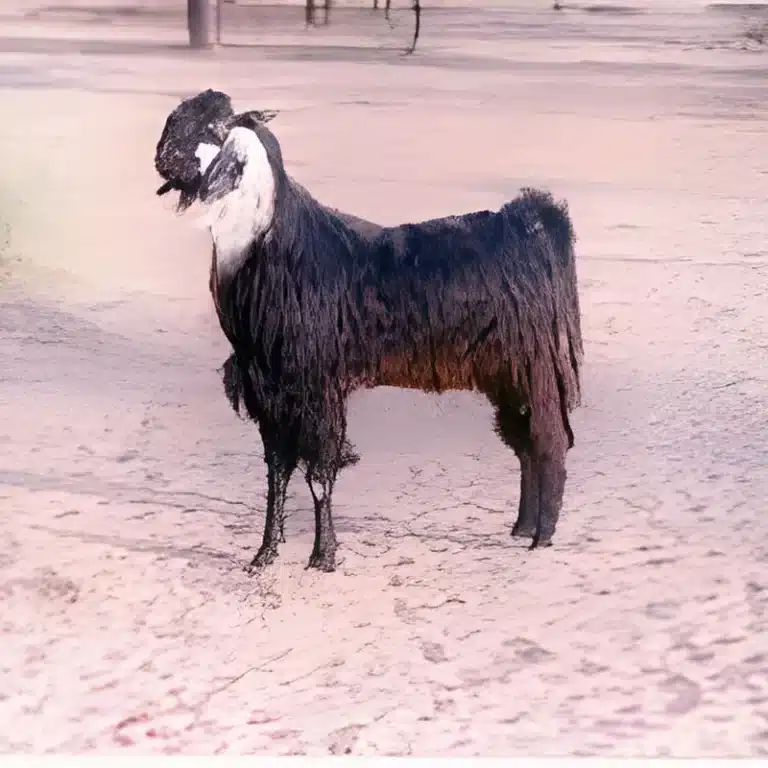
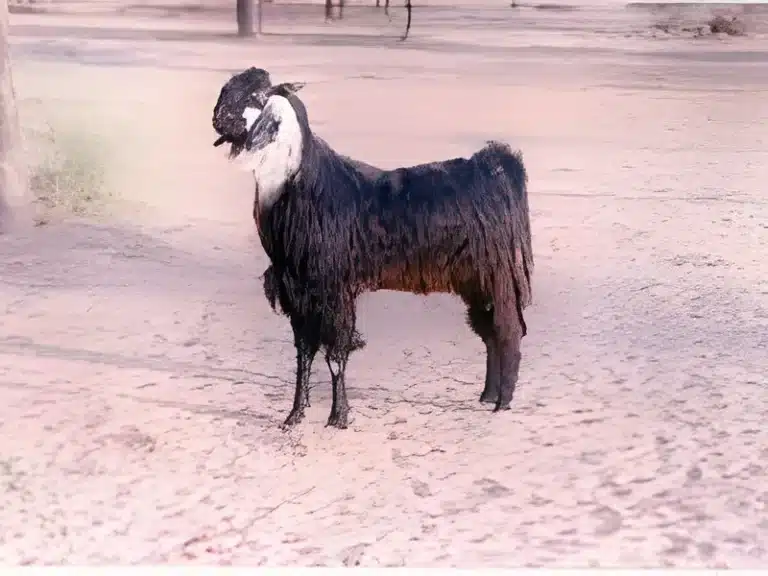
- Long black coat, sometimes with white or brown patches
- Medium-large frame with long drooping ears
- Slightly Roman nose and twisted horns
- Hardy desert breed with good dual productivity
🐐Physical Characteristics
A medium-large breed, predominantly black, often with white or brown patches and a long coarse coat. It has long drooping ears, a slightly convex nose and twisted horns, with a strong frame suited to desert grazing.
🥛Milk Production
A respectable 1–2 litres/day over a lactation of about 170 days — good for a desert breed, giving households a steady supply alongside meat.
🌦Climate Suitability
Excellently adapted to the arid Kutch desert. It tolerates extreme heat, water scarcity and sparse grazing, and covers long distances in search of browse.
🌾Feeding Requirements
Efficient on desert shrubs, tree leaves and crop residues, with 300–400 g concentrate for breeding and milking stock. Low feed cost makes it well-suited to pastoral systems.