
Farm planning files, ready to print. Vaccination, deworming, shed, feeding and records - in 8 languages.Browse downloads
India’s Most Trusted Goat Farming Knowledge Hub Mon – Sat: 9:00 AM – 6:00 PM
Sojat goat
INDIAN BREED · DAIRY

Sojat Goat

Sojat goat
Share: fWX

Quick Facts

📍OriginRajasthan
🐐Breed TypeDairy
⚖️Weight30–40 kg
📏Height65–75 cm
🥛Milk Production2–3 L/day
📅Life Span12–15 yrs
🌦️ClimateArid & Semi-arid

Breed Overview

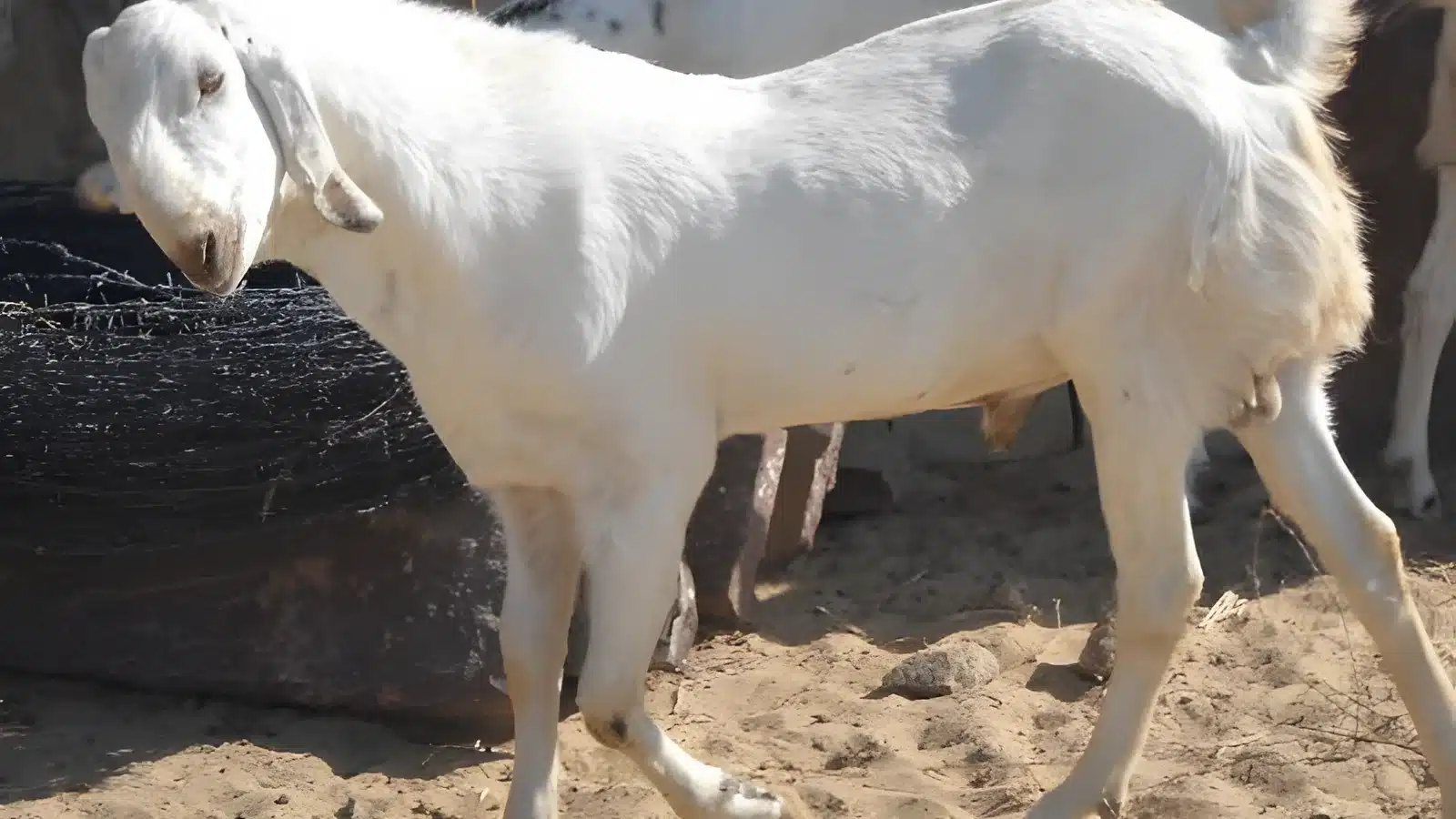
The Sojat goat is a prized Indian dairy and meat breed originating from the Sojat region of Rajasthan. Known for its striking white coat, long drooping ears and elegant build, it is one of the most sought-after breeds for commercial goat farming across North India.

Hardy and well-adapted to arid conditions, Sojat goats are especially valued for their rapid weight gain and manageable temperament, making them ideal for first-time farmers.

Key Characteristics
  • Pure white, medium-to-long coat
  • Long, flat, drooping ears (18–22 cm)
  • Roman nose with a slightly convex profile
  • Docile temperament, easy to handle

🐐Physical Characteristics

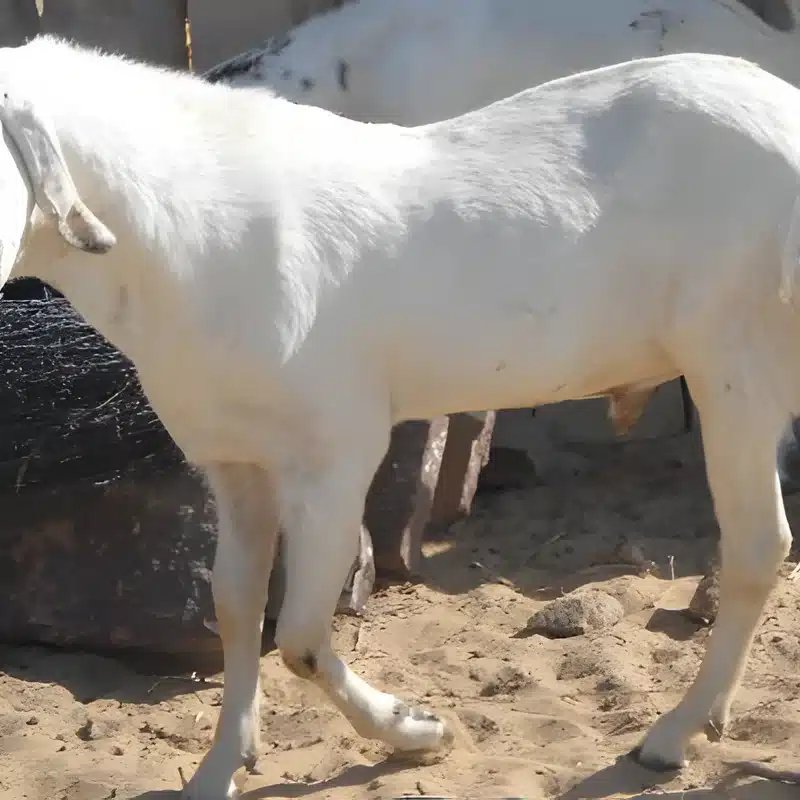
Pure white coat with a medium-to-long, glossy texture. Distinctive long, flat drooping ears (18–22 cm), a slightly Roman nose and a compact, well-muscled body. Both sexes may be horned or polled.

🥛Milk Production

Average yield of 2–3 litres/day with 3.5–4.5% butterfat and 3.2% protein. Lactation lasts 150–180 days, with a mild seasonal dip during the peak summer months.

🌦️Climate Suitability

Best suited to the arid and semi-arid belts of Rajasthan, Gujarat, Haryana and Madhya Pradesh. Comfortable at 20–42°C with low rainfall requirements; needs shade and dry bedding in monsoon.

🌾Feeding Requirements

Roughly 3–4 kg green fodder plus 300–400 g concentrate per adult per day. Thrives on locally available shrubs, tree leaves and crop residues, keeping feed costs low.

Advantages & Disadvantages

✓ Advantages
Excellent market demand and premium resale value
Rapid weight gain — reaches market weight quickly
Highly heat-tolerant and disease-resistant
Docile, easy to handle for first-time farmers
✗ Disadvantages
Sensitive to prolonged damp and cold conditions
Requires quality feed for peak milk yield
Purebred stock can be harder to source

Tips for Beginners

1
Buy from certified breeders
Insist on documented lineage and a health card to guarantee purebred, disease-free stock.
2
Build raised, airy housing
A dry, well-ventilated shed with slatted flooring prevents hoof rot and respiratory disease.
3
Vaccinate on schedule
Follow the PPR, ET and FMD schedule from day one — prevention is far cheaper than treatment.
4
Balance the ration
Combine green fodder with a mineral-rich concentrate to sustain 2–3 L/day milk yield.
5
Start small, scale steadily
Begin with 5–10 does and one quality buck; expand only once you master routine management.

Frequently Asked Questions

Sojat goats thrive in hot, arid and semi-arid regions with temperatures of 20–42°C. They tolerate dry heat exceptionally well but need shade and dry bedding during the monsoon.
A healthy Sojat doe yields about 2–3 litres of milk per day during peak lactation, with a lactation period of roughly 150–180 days.
Yes. Sojat goats adapt well to most of North and Central India. In high-rainfall or cold regions, provide raised, well-ventilated housing and dry flooring to prevent hoof and respiratory issues.

Interested in starting with Sojat goats?

Talk to our team for a personalised farm plan, or reach out with any questions about getting started.

Related Breeds

View All Breeds →