Sirohi Goat
The Sirohi goat is one of India’s hardiest indigenous breeds, native to the Sirohi district of Rajasthan and widely reared across Rajasthan and Gujarat. Prized as a dependable dual-purpose breed, it delivers both meat…
Breed Overview
The Sirohi goat is one of India’s hardiest indigenous breeds, native to the Sirohi district of Rajasthan and widely reared across Rajasthan and Gujarat. Prized as a dependable dual-purpose breed, it delivers both meat and milk while thriving in harsh, arid conditions where many other breeds struggle.
Renowned for its exceptional disease resistance and hardiness, the Sirohi is a favourite for commercial meat farming and a reliable choice for first-time farmers looking for a low-maintenance herd. Most does bear single kids; twins are uncommon.
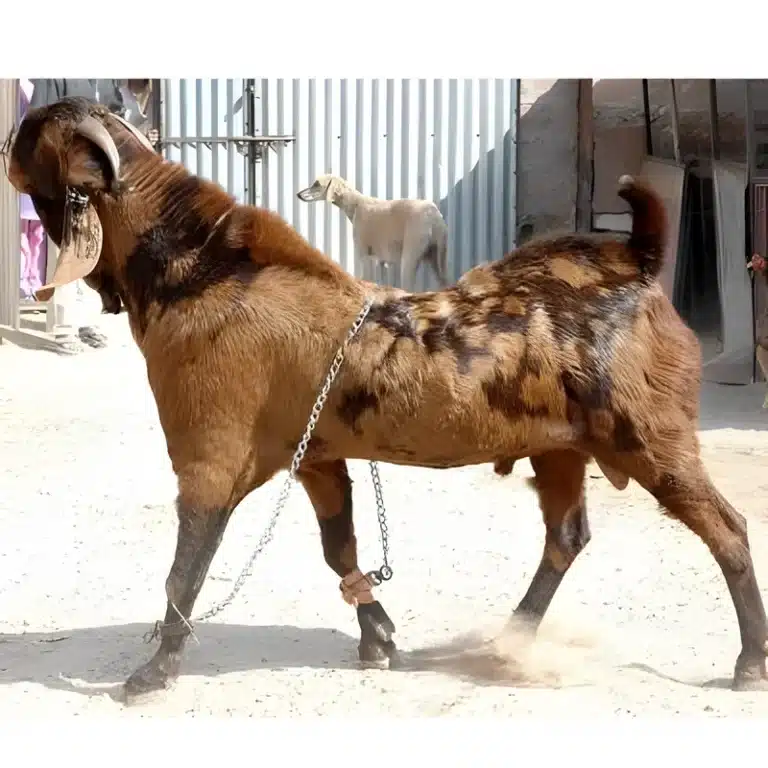
Key benefits of the Sirohi Goat
- Extremely hardy and highly disease-resistant
- Good body size for meat — adult bucks average about 50 kg
- Strong, year-round meat-market demand
- Low feed cost; thrives on grazing and browse
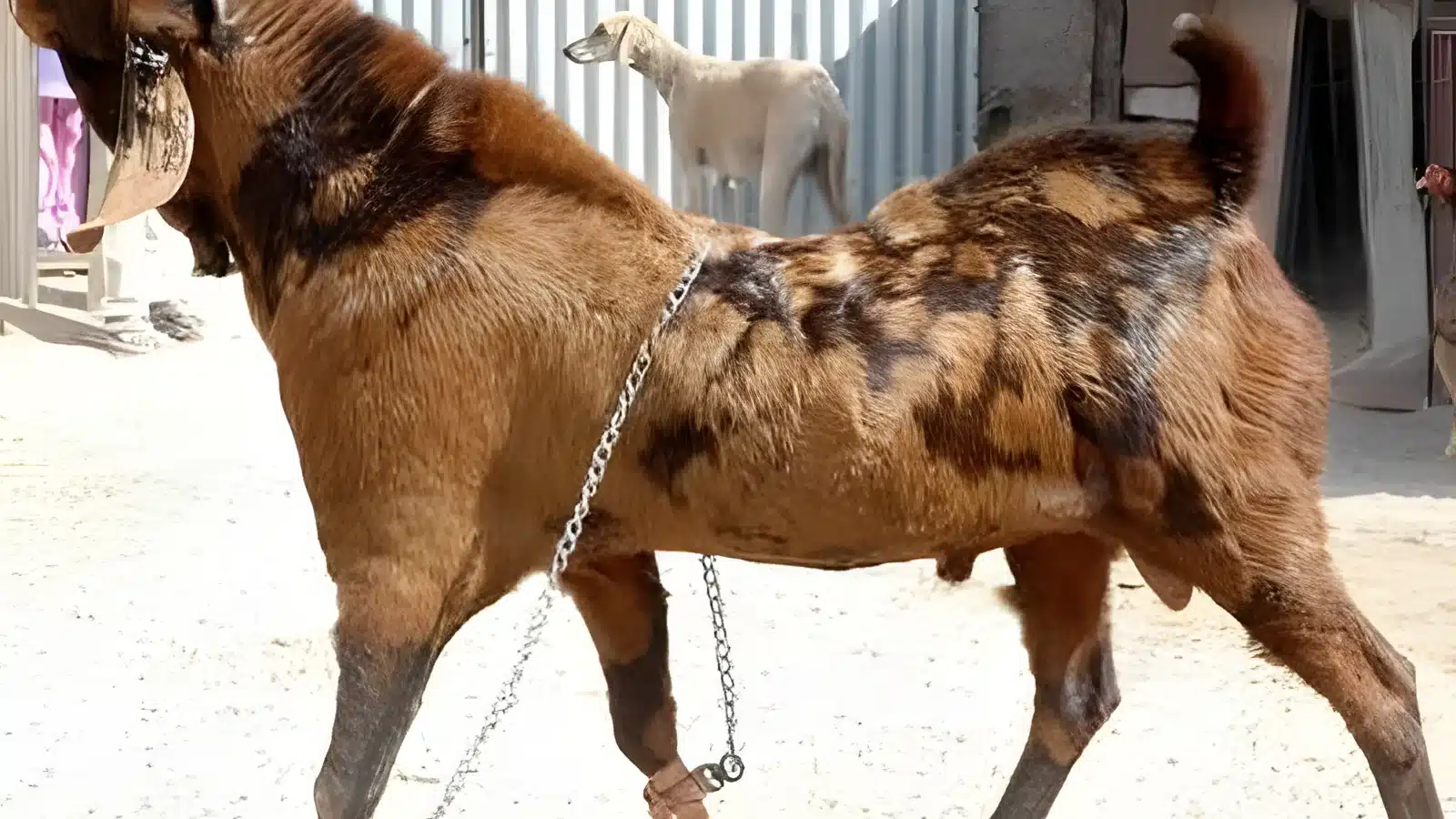
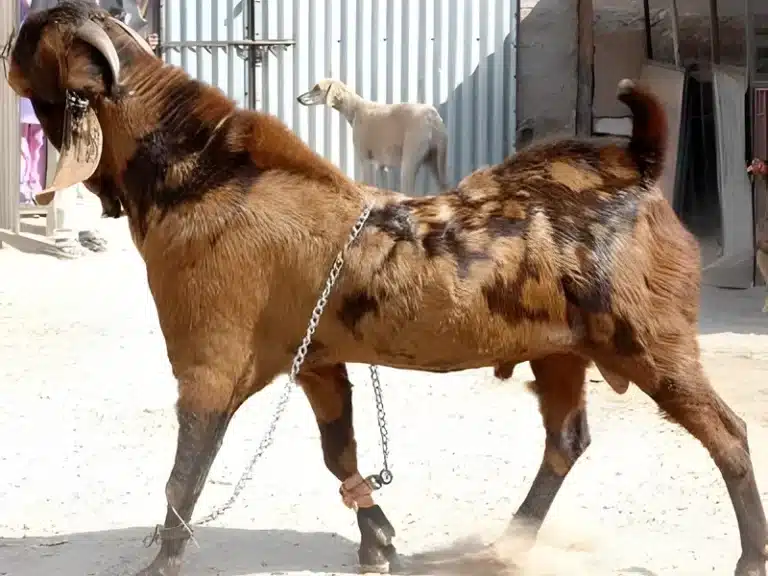
- Brown coat, often with light or dark brown spots
- Coarse, short, silky hair (~2 cm annual growth)
- Medium, flat, leaf-shaped drooping ears with wattles
- Compact, sturdy body with a slightly Roman nose
🐐Physical Characteristics
Predominantly brown coat, frequently marked with lighter or darker spots. Coarse but silky short hair, medium leaf-shaped ears that hang flat, and a compact, well-muscled frame. Both sexes are usually horned with a small curve.
🥛Milk Production
A modest yield of about 71 kg over a lactation of about 175 days (roughly 0.4 kg a day on average) — mainly for household use, with milk well-suited to local value-added products.
🌦️Climate Suitability
Outstanding tolerance of the arid and semi-arid heat of Rajasthan and Gujarat. Highly disease-resistant and able to walk long distances to graze; needs only basic shade and dry bedding.
🌾Feeding Requirements
Thrives on grazing and browse, supplemented with 300–400 g concentrate for breeding stock. Efficient on tree leaves, shrubs and crop residues, keeping feed costs among the lowest of any Indian breed.
Advantages & Disadvantages
Tips for Beginners
Frequently Asked Questions
Sources
Sirohi data: FAO, Sheep and goat breeds of India — Sirohi (home tract, body weight and height, lactation yield and length, litter size). Figures are breed averages; individual animals vary with feeding and management. Checked November 2026.