
Farm planning files, ready to print. Vaccination, deworming, shed, feeding and records - in 8 languages.Browse downloads
India’s Most Trusted Goat Farming Knowledge Hub Mon – Sat: 9:00 AM – 6:00 PM
Jamunapari Goat
INDIAN BREED · DAIRY

Jamunapari Goat

Jamunapari Goat
Share: fWX

Quick Facts

📍OriginEtawah, Uttar Pradesh
🐐Breed TypeDairy
⚖️Weight45–70 kg
📏Height75–90 cm
🥛Milk Production2–2.5 L/day
📅Life Span12–15 yrs
🌦️ClimateHot subtropical

Breed Overview

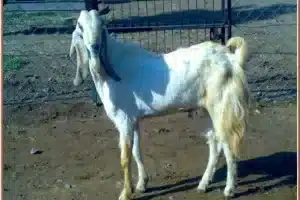
The Jamunapari is India's most majestic dairy goat, originating in the Chambal and Yamuna river ravines of Etawah district, Uttar Pradesh. Tall, elegant and unmistakable, it is one of the largest goat breeds in the country and a foundation breed used to improve goats across the world — including the famous Anglo-Nubian.

With a distinctive Roman nose, very long drooping ears and a proud, upstanding frame, the Jamunapari is bred primarily for high milk yield and premium breeding stock, commanding some of the highest prices in the Indian goat market.

Key Characteristics
  • Predominantly white with tan or brown patches on head and neck
  • Very long, flat, drooping ears (25–30 cm)
  • Prominent Roman ('parrot-mouth') nose
  • Tall, leggy frame with a tuft of long hair on the hindquarters

🐐Physical Characteristics

A tall, striking breed with a mostly white coat marked by tan or brown on the head and neck. Defined by a highly convex Roman nose, very long pendulous ears and long legs. A characteristic feathery tuft of hair grows on the thighs and hindquarters.

🥛Milk Production

One of India's top dairy goats, yielding 2–2.5 litres/day and around 200–250 kg over a 200-day lactation. The milk is rich and well-suited to both household use and commercial dairying.

🌦️Climate Suitability

Best suited to hot, dry subtropical plains with well-drained ground. Sensitive to prolonged damp and cold, so it needs raised, well-ventilated housing and dry bedding, especially during the monsoon.

🌾Feeding Requirements

A large breed with a healthy appetite — roughly 4–5 kg green fodder plus 400–500 g concentrate per adult per day. Responds strongly to good nutrition with higher milk yield and better kid growth.

Advantages & Disadvantages

✓ Advantages
Very high milk yield — a premier dairy breed
Large body size gives strong meat value too
Purebred breeding stock fetches premium prices
World-renowned bloodline, in demand for crossbreeding
✗ Disadvantages
Mostly single kids — slower herd multiplication
Sensitive to damp and cold; needs good housing
Requires quality feed and management for peak yield
Purebred animals are expensive to source

Tips for Beginners

1
Buy from certified breeders
Insist on documented lineage and a health card to guarantee purebred, disease-free stock.
2
Build raised, airy housing
A dry, well-ventilated shed with slatted flooring prevents hoof rot and respiratory disease.
3
Vaccinate on schedule
Follow the PPR, ET and FMD schedule from day one — prevention is far cheaper than treatment.
4
Balance the ration
Combine green fodder with a mineral-rich concentrate to sustain healthy growth and milk yield.
5
Start small, scale steadily
Begin with 5–10 does and one quality buck; expand only once you master routine management.

Frequently Asked Questions

A healthy Jamunapari doe yields about 2–2.5 litres of milk per day, or roughly 200–250 kg across a lactation of around 200 days — placing it among the highest-yielding indigenous dairy goats in India.
Its size and milk potential made it a key breed for improving goats worldwide. It is one of the ancestors of the Anglo-Nubian and has been used in breeding programmes across Asia, Africa and the Caribbean.
Yes, across hot, dry regions of India. In humid or cold, high-rainfall areas they must have raised, well-ventilated, dry housing, as the breed is sensitive to damp and cold.

Interested in starting with Jamunapari Goats?

Talk to our team for a personalised farm plan, or reach out with any questions about getting started.

Related Breeds

View All Breeds →