Zalawadi Goat
The Zalawadi is a striking dual-purpose breed from the Zalawad region of the Surendranagar and Rajkot districts of Saurashtra, Gujarat. Tall and mostly black with white speckling, it is instantly recognised by its long,…

Breed Overview
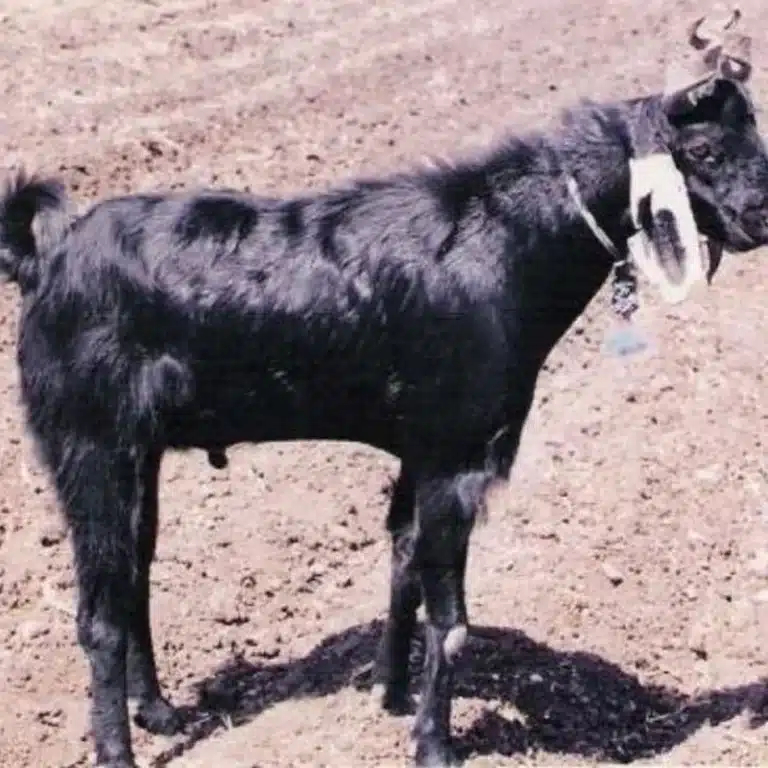
The Zalawadi is a striking dual-purpose breed from the Zalawad region of the Surendranagar and Rajkot districts of Saurashtra, Gujarat. Tall and mostly black with white speckling, it is instantly recognised by its long, spiralled corkscrew horns and long drooping ears.
Well-adapted to the dry Saurashtra plains, the Zalawadi gives good milk alongside quality meat, and its distinctive bristly coat is also used for making ropes and rough textiles — making it a genuinely multi-purpose desert breed.
Key benefits of the Zalawadi Goat
- Distinctive, high-value dual-purpose breed
- Good milk plus quality meat
- Coarse hair used for ropes and textiles
- Hardy and well-adapted to dry Saurashtra
- Black coat with white speckles or spots
- Long, spiralled corkscrew horns in both sexes
- Long, flat, drooping ears
- Tall frame with a slightly Roman nose
🐐Physical Characteristics
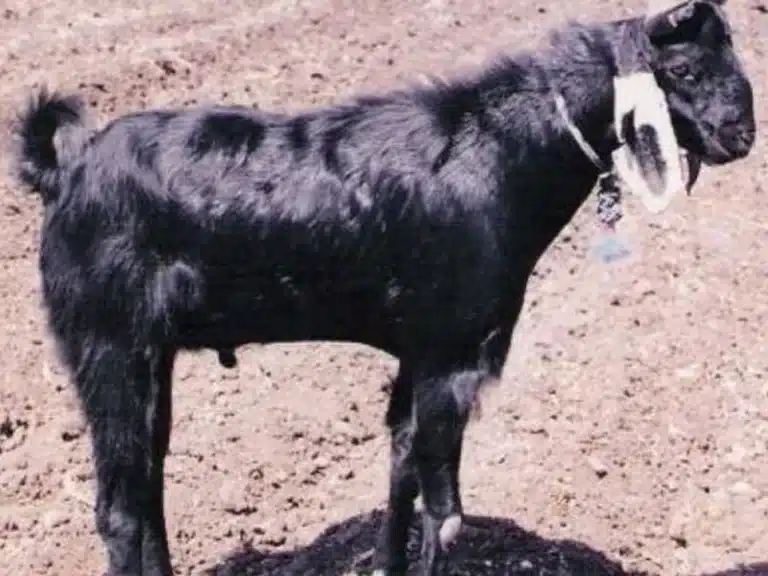
A tall, deep-bodied breed, predominantly black with white speckling. Its most striking feature is a pair of long, twisted corkscrew horns. It has long pendulous ears, a slightly convex nose and a coarse, bristly coat.
🥛Milk Production
A good dual-purpose yield of 1.5–2 litres/day over a lactation of about 180 days, giving Saurashtra farmers a reliable household and small-commercial supply alongside meat.
🌦️Climate Suitability
Well-adapted to the arid and semi-arid plains of Saurashtra. Hardy and heat-tolerant, it thrives on grazing and covers long distances for feed and water.
🌾Feeding Requirements
Efficient on local grazing, shrubs and crop residues, with 300–400 g concentrate for milking and breeding stock. Its coarse hair is a useful secondary product for ropes and matting.