
Farm planning files, ready to print. Vaccination, deworming, shed, feeding and records - in 8 languages.Browse downloads
India’s Most Trusted Goat Farming Knowledge Hub Mon – Sat: 9:00 AM – 6:00 PM
Marwari Goat
INDIAN BREED · MEAT & HAIR

Marwari Goat

Marwari Goat
Share: fWX

Quick Facts

📍OriginRajasthan & Gujarat
🐐Breed TypeMeat & Hair
⚖️Weight25–35 kg
📏Height60–70 cm
🥛Milk Production0.5–1 L/day
📅Life Span10–12 yrs
🌦️ClimateDesert / Arid

Breed Overview

The Marwari is a supremely hardy desert breed from the Marwar region of Rajasthan and neighbouring Gujarat. Covered in a long, coarse black coat, it is bred for meat and for hair, and is built to survive the extreme heat, drought and sparse grazing of the Thar Desert.

A true survivor, the Marwari can walk long distances for feed and water and thrives where more delicate breeds fail — making it a backbone of pastoral and migratory goat-keeping across arid western India.

Key Characteristics
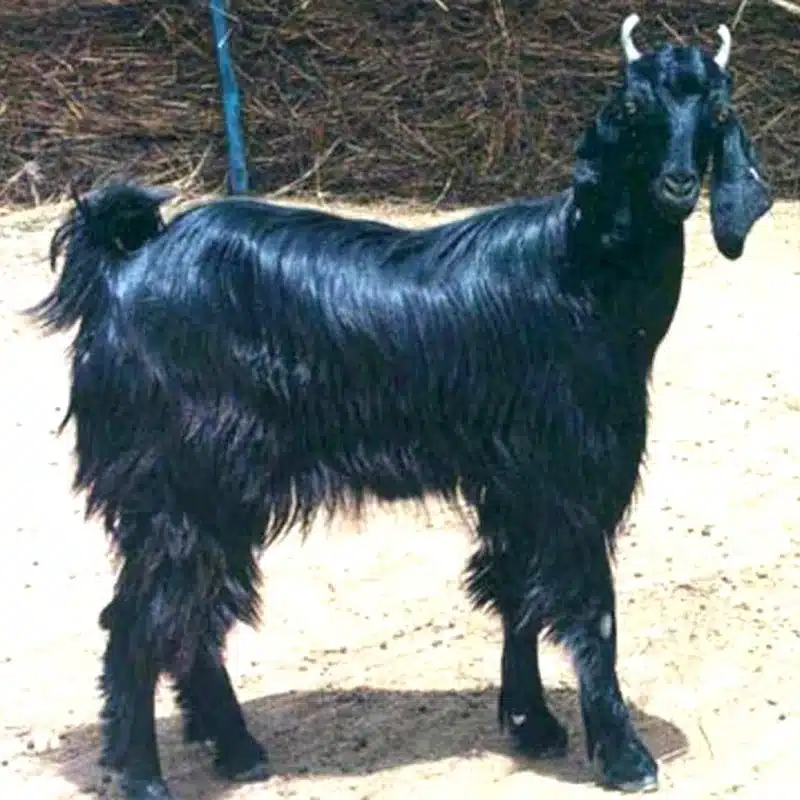
  • Long, coarse black hair over the whole body
  • Medium build with short drooping ears
  • Compact, drought-hardy frame
  • Bred for meat and coarse hair, not milk

🐐Physical Characteristics

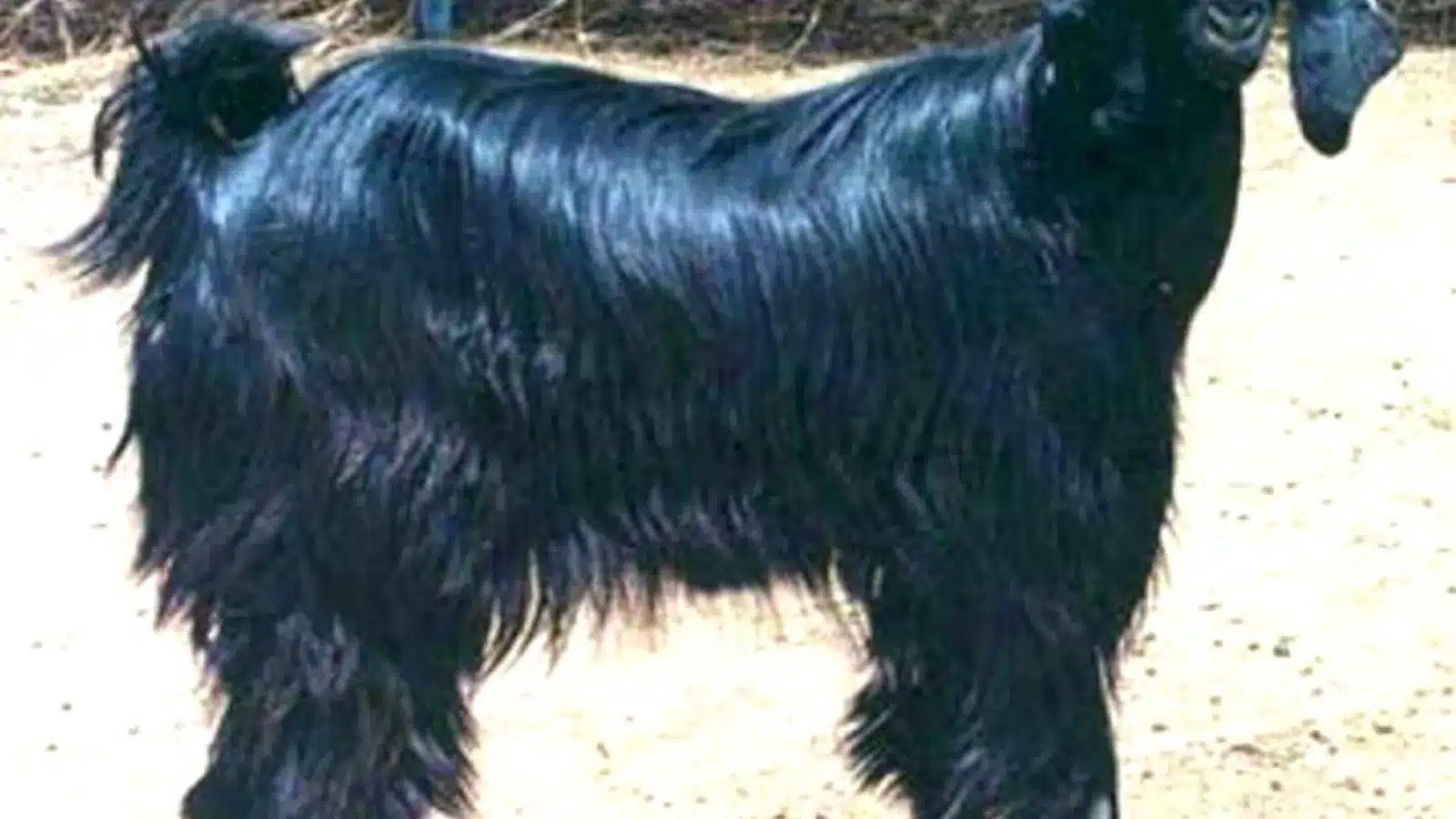
A medium breed almost entirely black, covered in long, coarse hair that shields it from sun and sand. It has short drooping ears, small horns and a compact, sturdy body suited to long-distance grazing in the desert.

🥛Milk Production

A low 0.5–1 litre/day — sufficient only to raise its kids. The Marwari is valued for meat and hair rather than milk, reflecting its harsh, low-input environment.

🌦Climate Suitability

One of India's most drought- and heat-tolerant breeds, purpose-built for the Thar Desert. It withstands extreme temperatures, scarce water and thorny, sparse grazing with minimal care.

🌾Feeding Requirements

Extremely economical — subsists on desert shrubs, tree leaves and thorny browse with almost no supplementation. Ideal for pastoral and migratory systems where feed is scarce.

Advantages & Disadvantages

✓ Advantages
Exceptional drought and heat tolerance
Very low feed cost — thrives on desert browse
Coarse hair is a useful secondary product
Robust and disease-resistant in harsh climates
✗ Disadvantages
Low milk yield — not a dairy breed
Modest body size and slower growth
Coarse meat compared with softer breeds

Tips for Beginners

1
Buy from certified breeders
Insist on documented lineage and a health card to guarantee purebred, disease-free stock.
2
Build raised, airy housing
A dry, well-ventilated shed with slatted flooring prevents hoof rot and respiratory disease.
3
Vaccinate on schedule
Follow the PPR, ET and FMD schedule from day one — prevention is far cheaper than treatment.
4
Balance the ration
Combine green fodder with a mineral-rich concentrate to sustain healthy growth and milk yield.
5
Start small, scale steadily
Begin with 5–10 does and one quality buck; expand only once you master routine management.

Frequently Asked Questions

It evolved in the Thar Desert of Rajasthan, so it is built to withstand extreme heat, drought and sparse grazing. It can walk long distances for feed and water and survives on thorny desert browse where other breeds cannot.
Primarily meat and its long, coarse hair. Its low milk yield means it is not kept for dairy, but its resilience makes it invaluable for pastoral and migratory farming in arid regions.
Almost always black, with a long, coarse coat covering the whole body that helps protect it from the desert sun and blowing sand.

Interested in starting with Marwari goats?

Talk to our team for a personalised farm plan, or reach out with any questions about getting started.

Related Breeds

View All Breeds →