
Farm planning files, ready to print. Vaccination, deworming, shed, feeding and records - in 8 languages.Browse downloads
India’s Most Trusted Goat Farming Knowledge Hub Mon – Sat: 9:00 AM – 6:00 PM
Sirohi Goat
INDIAN BREED · DUAL PURPOSE

Sirohi Goat

Sirohi Goat
Share: fWX

Quick Facts

📍OriginRajasthan & Gujarat
🐐Breed TypeDual (Meat + Milk)
⚖️Weight35–50 kg
📏Height62–80 cm
🥛Milk Production1–2 L/day
📅Life Span10–12 yrs
🌦️ClimateArid & Semi-arid

Breed Overview

The Sirohi goat is one of India's hardiest indigenous breeds, native to the Sirohi district of Rajasthan and widely reared across Rajasthan and Gujarat. Prized as a dependable dual-purpose breed, it delivers both meat and milk while thriving in harsh, arid conditions where many other breeds struggle.

Renowned for its exceptional disease resistance and strong twinning rate, the Sirohi is a favourite for commercial meat farming and a reliable choice for first-time farmers looking for a low-maintenance, fast-multiplying herd.

Key Characteristics
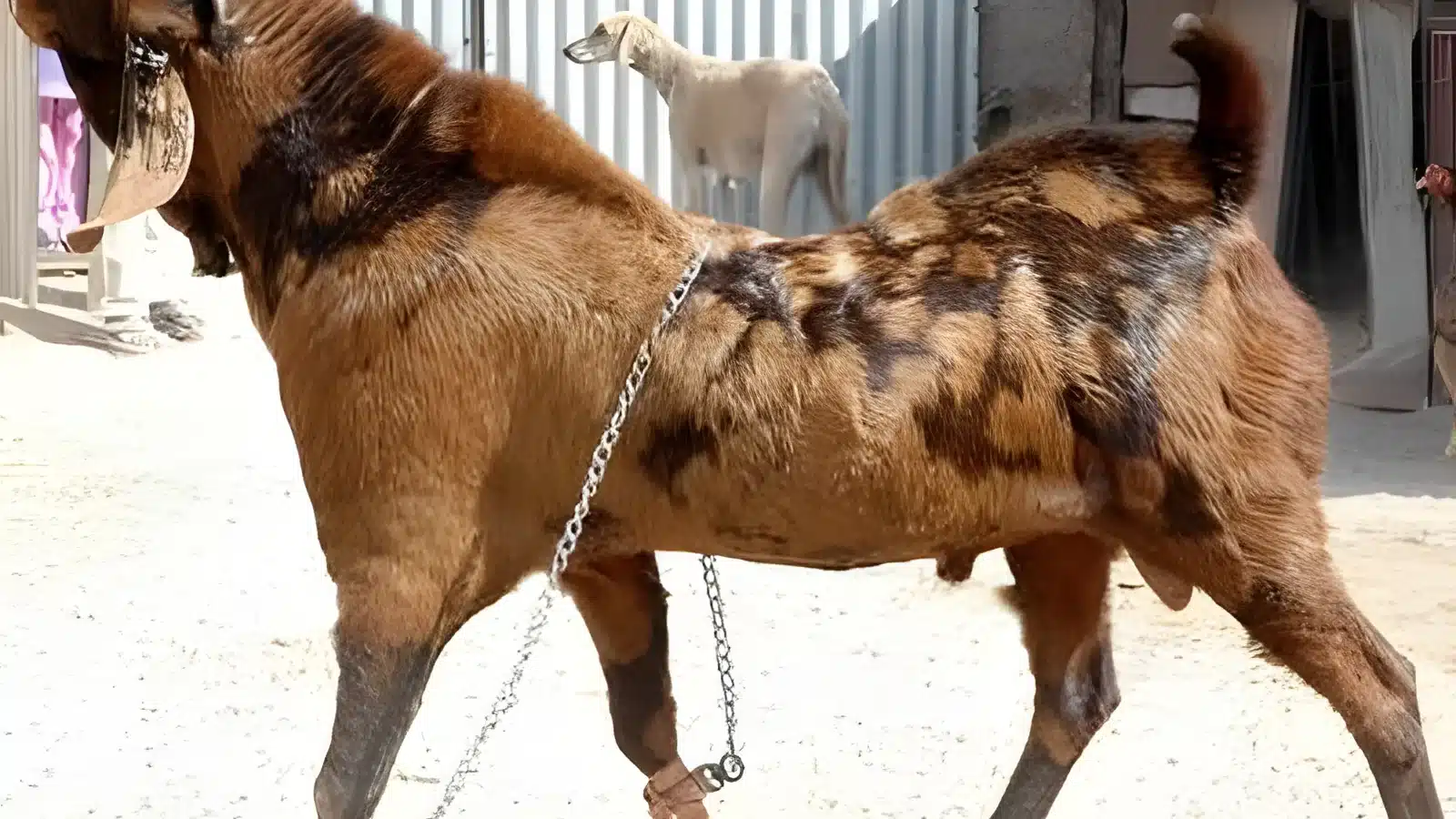
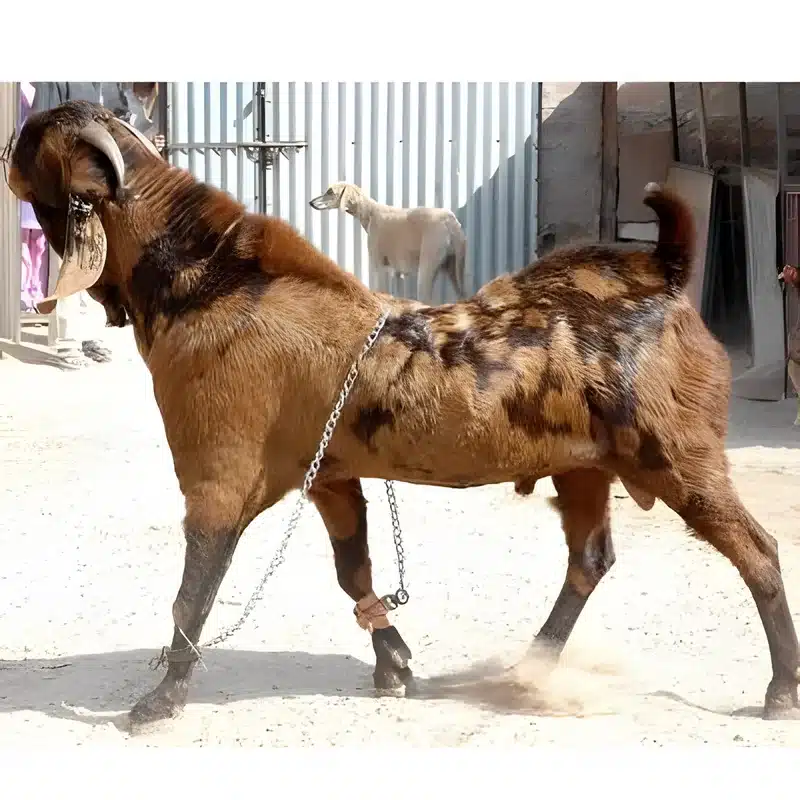
  • Brown coat, often with light or dark brown spots
  • Coarse, short, silky hair (~2 cm annual growth)
  • Medium, flat, leaf-shaped drooping ears with wattles
  • Compact, sturdy body with a slightly Roman nose

🐐Physical Characteristics

Predominantly brown coat, frequently marked with lighter or darker spots. Coarse but silky short hair, medium leaf-shaped ears that hang flat, and a compact, well-muscled frame. Both sexes are usually horned with a small curve.

🥛Milk Production

A modest but steady 1–2 litres/day over a lactation of about 158 days — enough for household use plus a marketable surplus, with milk well-suited to local value-added products.

🌦️Climate Suitability

Outstanding tolerance of the arid and semi-arid heat of Rajasthan and Gujarat. Highly disease-resistant and able to walk long distances to graze; needs only basic shade and dry bedding.

🌾Feeding Requirements

Thrives on grazing and browse, supplemented with 300–400 g concentrate for breeding stock. Efficient on tree leaves, shrubs and crop residues, keeping feed costs among the lowest of any Indian breed.

Advantages & Disadvantages

✓ Advantages
Extremely hardy and highly disease-resistant
Frequent twins — herd multiplies rapidly
Strong, year-round meat-market demand
Low feed cost; thrives on grazing and browse
✗ Disadvantages
Milk yield lower than dedicated dairy breeds
Coat colour varies — not visually uniform
Best growth needs some supplementary feeding

Tips for Beginners

1
Buy from certified breeders
Insist on documented lineage and a health card to guarantee purebred, disease-free stock.
2
Build raised, airy housing
A dry, well-ventilated shed with slatted flooring prevents hoof rot and respiratory disease.
3
Vaccinate on schedule
Follow the PPR, ET and FMD schedule from day one — prevention is far cheaper than treatment.
4
Balance the ration
Combine green fodder with a mineral-rich concentrate to sustain healthy growth and milk yield.
5
Start small, scale steadily
Begin with 5–10 does and one quality buck; expand only once you master routine management.

Frequently Asked Questions

The Sirohi is a dual-purpose breed, but it is most valued for meat thanks to its fast growth, hardiness and strong twinning. It also gives 1–2 litres of milk a day, enough for household use and a small surplus.
They are exceptionally disease-resistant, tolerate extreme heat, multiply quickly through frequent twin births and thrive on low-cost grazing — a combination that keeps risk and running costs low for new farmers.
Adult does weigh around 23–30 kg and bucks 35–50 kg, with healthy, well-fed males reaching the upper end of that range.

Interested in starting with Sirohi goats?

Talk to our team for a personalised farm plan, or reach out with any questions about getting started.

Related Breeds

View All Breeds →