
Quick Facts
Breed Overview
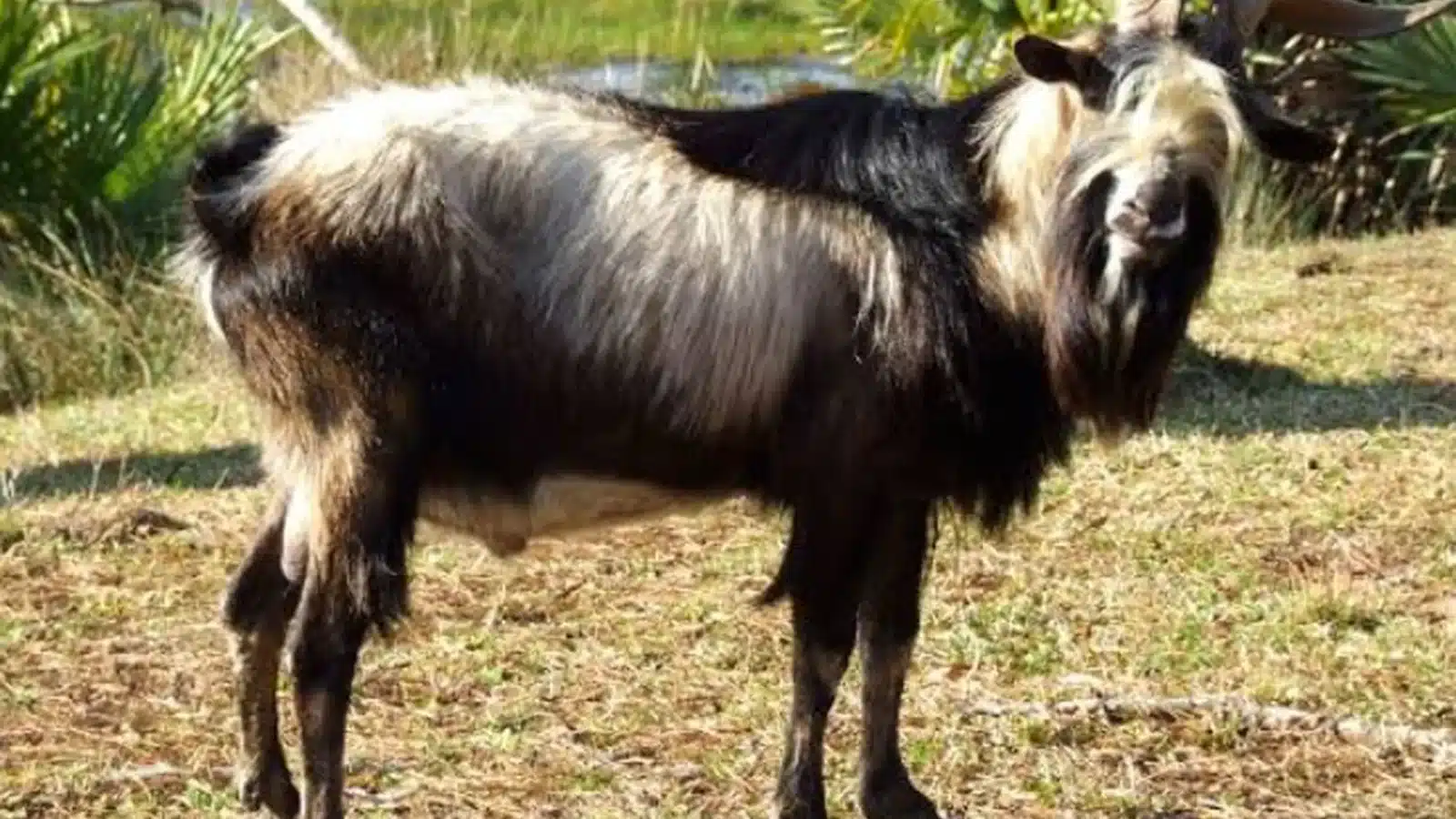
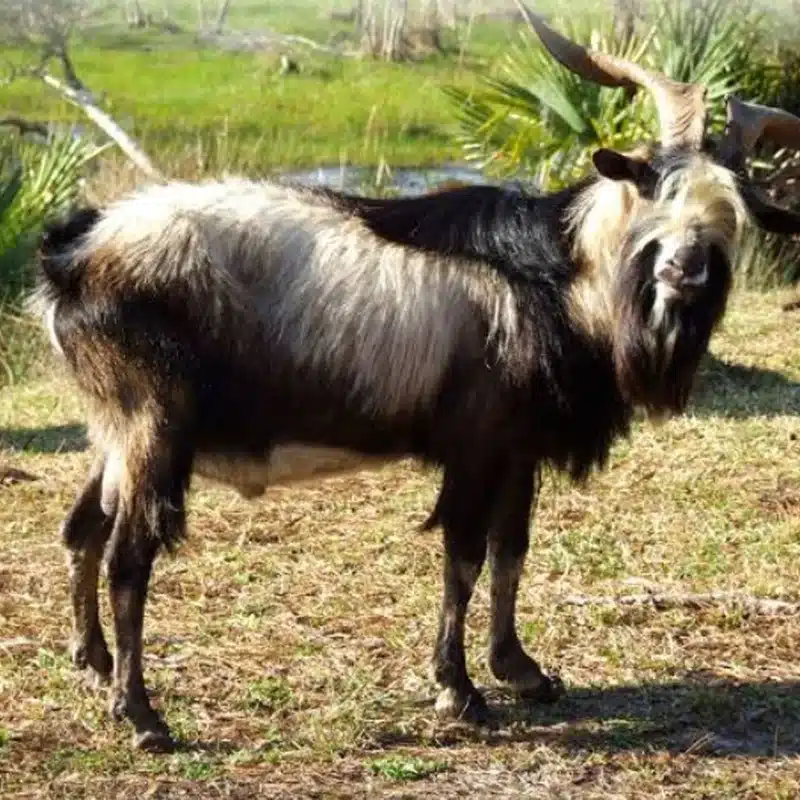
The Spanish goat — also called the 'brush goat' or 'scrub goat' — descends from goats brought to the Americas by early Spanish explorers and developed into a hardy landrace across the southern United States. Extremely rugged and self-reliant, it comes in every colour and is bred primarily for meat and for clearing brush and scrub.
Prized for its hardiness, fertility and low-maintenance nature, the Spanish goat thrives on marginal land and rough browse where more delicate breeds struggle, making it a foundation breed for extensive, low-input meat production and land management.
- Every colour and pattern occurs — no fixed standard
- Rugged, lean, athletic frame with large horns
- Extremely hardy, fertile and self-reliant
- Bred for meat and for brush/scrub clearing
🐐Physical Characteristics
A hardy, athletic landrace of highly variable colour, with a lean frame and often large, twisting horns. Generations of survival on rough range have produced a self-reliant, adaptable and disease-resistant animal.
🥛Milk Production
A modest 1–1.5 litres/day — enough to raise strong kids, as the breed is kept for meat and land clearing rather than dairy.
🌦️Climate Suitability
One of the most adaptable breeds anywhere, thriving from hot dry rangeland to humid scrub. Extremely hardy and heat-tolerant, needing minimal shelter and care.
🌾Feeding Requirements
Superbly efficient on brush, weeds, scrub and rough browse — it is often used specifically to clear unwanted vegetation — needing little or no supplementary feed on range.