Farm planning files, ready to print. Vaccination, deworming, shed, feeding and records - in 8 languages.Browse downloads
India’s Most Trusted Goat Farming Knowledge Hub Mon – Sat: 9:00 AM – 6:00 PM
Boer Goat
EXOTIC BREED · MEAT

Boer Goat

Boer Goat
Share: fWX

Quick Facts

📍OriginSouth Africa
🐐Breed TypeMeat
⚖️Weight90–120 kg
📏Height70–90 cm
🥛Milk Production1.5–2.5 L/day
📅Life Span10–12 yrs
🌦️ClimateWarm / Semi-arid

Breed Overview

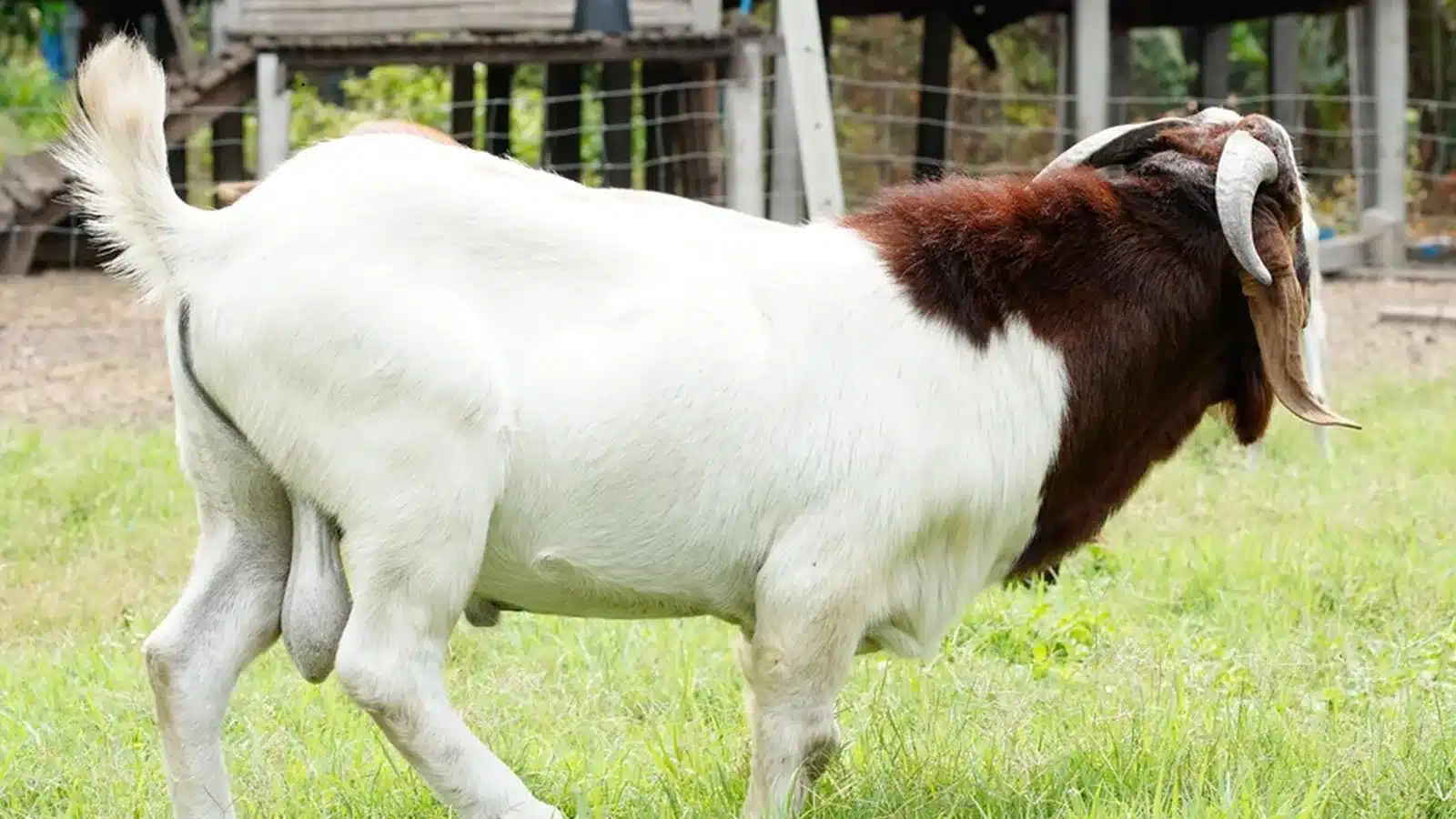
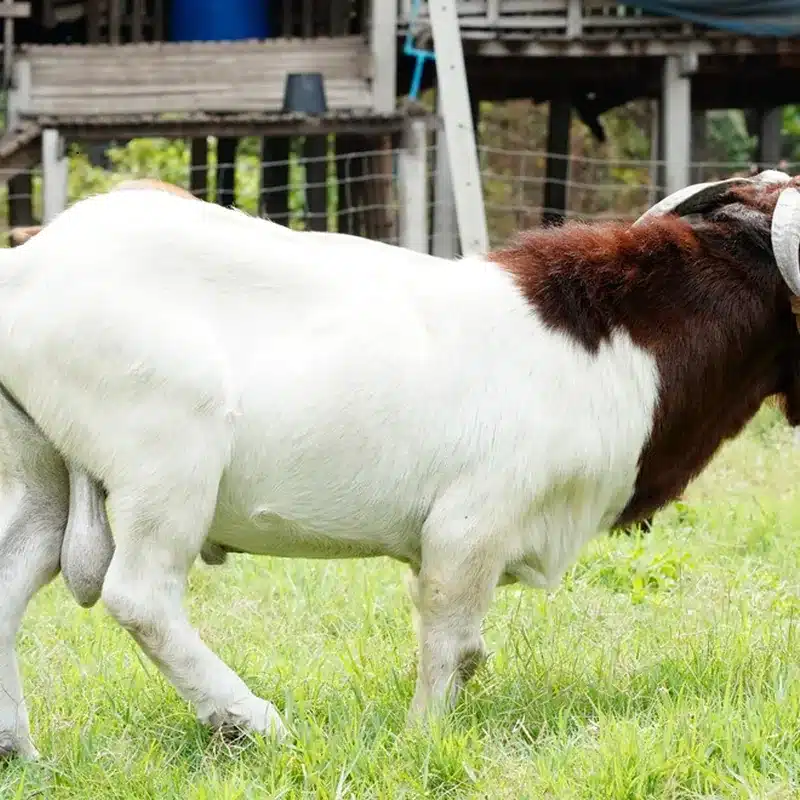
The Boer is the world's premier meat goat, developed in South Africa and now farmed globally for its exceptional size, muscling and rapid growth. Instantly recognised by its white body and distinctive red-brown head, it is increasingly used in India to improve the meat output of local breeds through crossbreeding.

Fast-growing, docile and heavily muscled, the Boer reaches market weight far quicker than most indigenous breeds. It performs best in warm, dry conditions and is a strong choice for commercial meat farms with good management.

Key Characteristics
  • White body with a distinctive red-brown head
  • Large, heavily muscled, deep-bodied frame
  • Long pendulous ears and a Roman nose
  • Very fast growth and high dressing percentage

🐐Physical Characteristics

A large, powerfully muscled breed with a white body and a characteristic red-brown head and neck. It has long pendulous ears, a Roman nose and a deep, broad frame giving an outstanding meat yield and dressing percentage.

🥛Milk Production

Does give 1.5–2.5 litres/day — good milk that supports fast-growing kids, though the Boer is bred for meat rather than dairy.

🌦Climate Suitability

Best suited to warm, dry and semi-arid climates similar to its South African homeland. In India it does well in drier regions with good shelter; humid, high-rainfall areas need extra care for hoof and parasite management.

🌾Feeding Requirements

A large breed with a strong appetite — about 5–6 kg green fodder plus 500–700 g concentrate per adult daily for fast finishing. Responds dramatically to good nutrition with rapid weight gain.

Advantages & Disadvantages

✓ Advantages
World's best meat breed — fast growth, heavy muscling
Excellent dressing percentage and carcass quality
Improves local breeds when used for crossbreeding
Docile and easy to handle for its size
✗ Disadvantages
High feed and management cost
Purebred stock is expensive in India
Less suited to humid, high-rainfall regions

Tips for Beginners

1
Buy from certified breeders
Insist on documented lineage and a health card to guarantee purebred, disease-free stock.
2
Build raised, airy housing
A dry, well-ventilated shed with slatted flooring prevents hoof rot and respiratory disease.
3
Vaccinate on schedule
Follow the PPR, ET and FMD schedule from day one — prevention is far cheaper than treatment.
4
Balance the ration
Combine green fodder with a mineral-rich concentrate to sustain healthy growth and milk yield.
5
Start small, scale steadily
Begin with 5–10 does and one quality buck; expand only once you master routine management.

Frequently Asked Questions

Yes, with good management — especially in warm, dry regions. It is most valuable for crossbreeding with local breeds to boost meat output, as purebred Boers need quality feed and care to perform well.
Very fast — kids can gain weight rapidly and reach market weight far sooner than most indigenous breeds, which is why the Boer is the world's leading meat goat.
It is a large breed — mature bucks can reach 90–120 kg or more, with does somewhat lighter — giving an exceptional meat yield per animal.

Interested in starting with Boer goats?

Talk to our team for a personalised farm plan, or reach out with any questions about getting started.

Related Breeds

View All Breeds →