
Farm planning files, ready to print. Vaccination, deworming, shed, feeding and records - in 8 languages.Browse downloads
India’s Most Trusted Goat Farming Knowledge Hub Mon – Sat: 9:00 AM – 6:00 PM
Spanish Goat
EXOTIC BREED · MEAT

Spanish Goat

Spanish Goat
Share: fWX

Quick Facts

📍OriginSpain / USA
🐐Breed TypeMeat & Brush control
⚖️Weight45–75 kg
📏Height60–75 cm
🥛Milk Production1–1.5 L/day
📅Life Span12–15 yrs
🌦️ClimateVery adaptable

Breed Overview

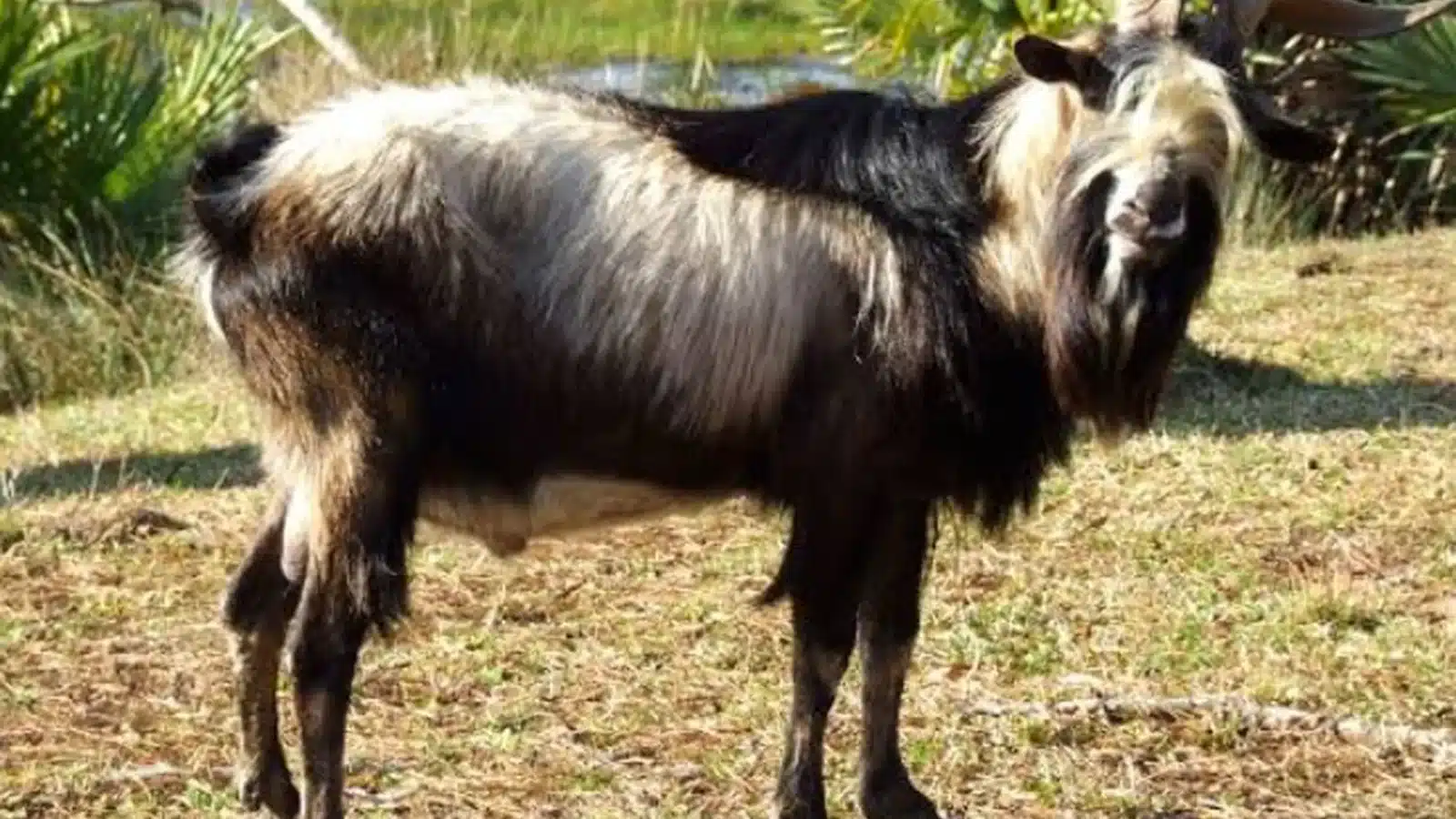
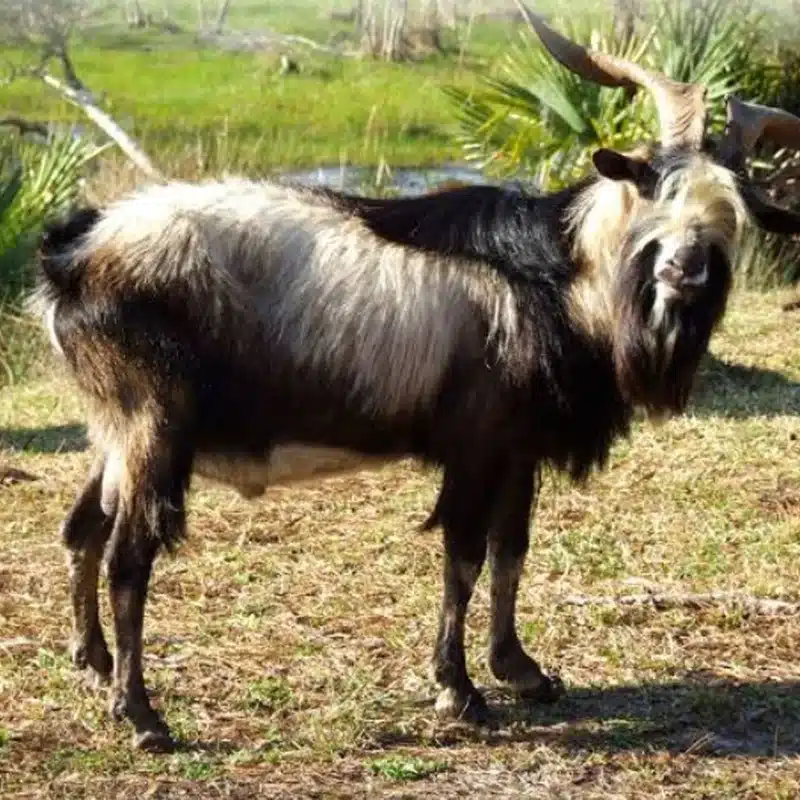
The Spanish goat — also called the 'brush goat' or 'scrub goat' — descends from goats brought to the Americas by early Spanish explorers and developed into a hardy landrace across the southern United States. Extremely rugged and self-reliant, it comes in every colour and is bred primarily for meat and for clearing brush and scrub.

Prized for its hardiness, fertility and low-maintenance nature, the Spanish goat thrives on marginal land and rough browse where more delicate breeds struggle, making it a foundation breed for extensive, low-input meat production and land management.

Key Characteristics
  • Every colour and pattern occurs — no fixed standard
  • Rugged, lean, athletic frame with large horns
  • Extremely hardy, fertile and self-reliant
  • Bred for meat and for brush/scrub clearing

🐐Physical Characteristics

A hardy, athletic landrace of highly variable colour, with a lean frame and often large, twisting horns. Generations of survival on rough range have produced a self-reliant, adaptable and disease-resistant animal.

🥛Milk Production

A modest 1–1.5 litres/day — enough to raise strong kids, as the breed is kept for meat and land clearing rather than dairy.

🌦️Climate Suitability

One of the most adaptable breeds anywhere, thriving from hot dry rangeland to humid scrub. Extremely hardy and heat-tolerant, needing minimal shelter and care.

🌾Feeding Requirements

Superbly efficient on brush, weeds, scrub and rough browse — it is often used specifically to clear unwanted vegetation — needing little or no supplementary feed on range.

Advantages & Disadvantages

✓ Advantages
Extremely hardy, fertile and low-maintenance
Thrives on marginal land and rough browse
Excellent for brush and scrub clearing
Good meat production under extensive systems
✗ Disadvantages
No uniform type — highly variable animals
Modest milk; kept mainly for meat
Purebred landrace stock rare in India

Tips for Beginners

1
Buy from certified breeders
Insist on documented lineage and a health card to guarantee purebred, disease-free stock.
2
Build raised, airy housing
A dry, well-ventilated shed with slatted flooring prevents hoof rot and respiratory disease.
3
Vaccinate on schedule
Follow the PPR, ET and FMD schedule from day one — prevention is far cheaper than treatment.
4
Balance the ration
Combine green fodder with a mineral-rich concentrate to sustain healthy growth and milk yield.
5
Start small, scale steadily
Begin with 5–10 does and one quality buck; expand only once you master routine management.

Frequently Asked Questions

Because it is exceptionally good at clearing brush, weeds and scrub — it thrives on rough browse that other livestock won't touch, and is often kept specifically for vegetation and land management alongside meat production.
Primarily meat and brush control. It is a hardy, fertile, low-maintenance landrace bred for extensive, low-input production on marginal land.
Extremely — descended from goats that survived feral across the Americas, it is one of the most rugged, adaptable and disease-resistant breeds, thriving on rough range with minimal care.

Interested in starting with Spanish goats?

Talk to our team for a personalised farm plan, or reach out with any questions about getting started.

Related Breeds

View All Breeds →