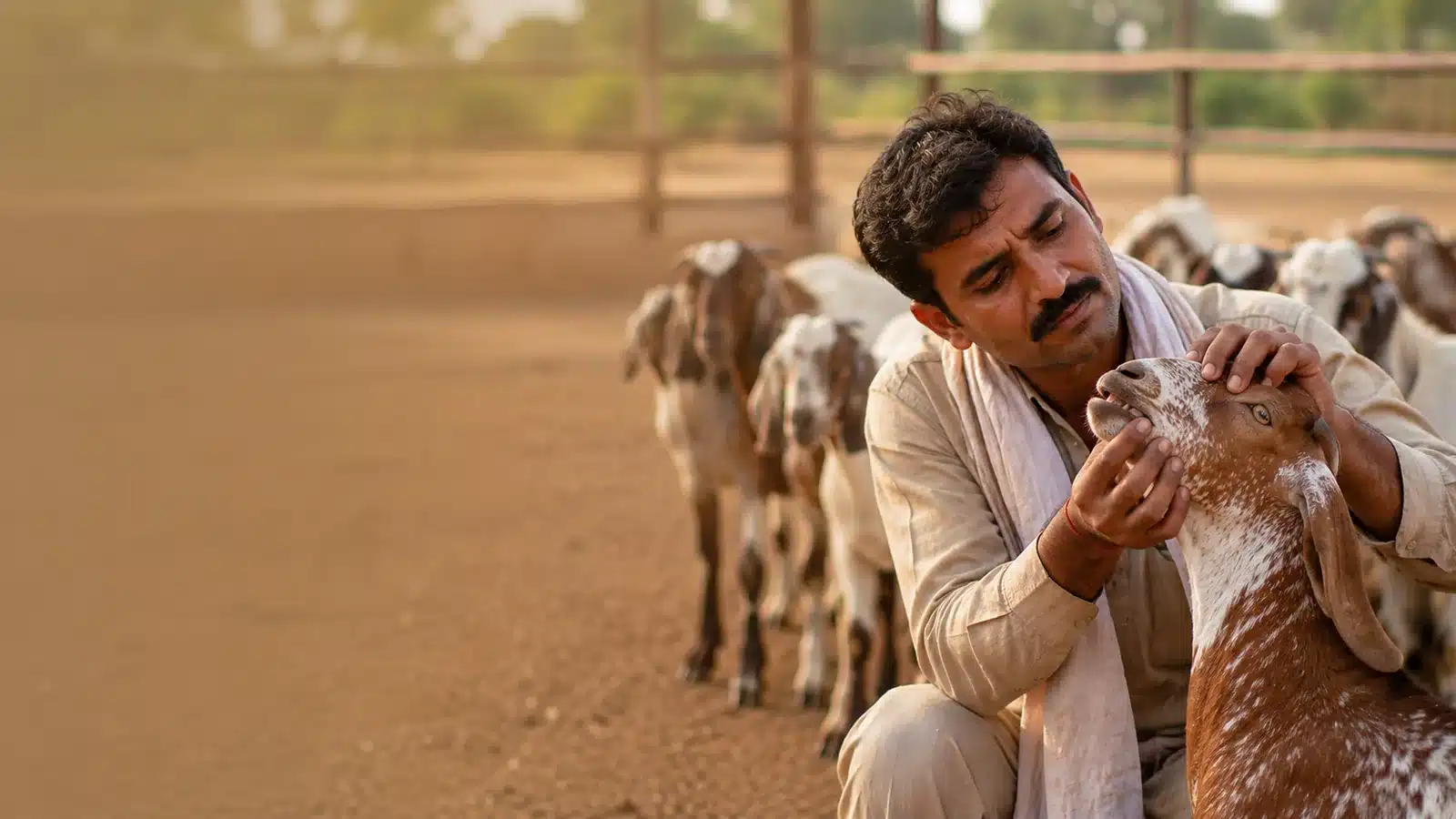

Diseases of Goats
The major diseases of goats in India — PPR, FMD, ET, pneumonia, parasites and more — with the early warning signs and how to keep them out of your herd.
Most goat diseases are far cheaper to prevent than to treat, and the farmers who lose the fewest animals are the ones who spot trouble early. This guide covers the major diseases of goats in India, the warning signs to watch for, and how to keep them out of your herd.
First signs a goat is unwell
Watch the herd at every feed. Act the same day if you see:
- Off feed, standing apart, dull or drooping ears.
- Fever, fast breathing, coughing or nasal/eye discharge.
- Diarrhoea, or straining and no dung.
- Limping, swollen joints or reluctance to stand.
- A sudden drop in milk, or a hot, swollen udder.
Major infectious diseases
| Disease | Key signs | Prevention |
|---|---|---|
| PPR | High fever, mouth sores, nasal/eye discharge, pneumonia, diarrhoea; spreads fast | Vaccinate; isolate & call a vet early |
| FMD | Blisters in mouth and on feet, drooling, lameness, off feed | Twice-yearly vaccination; biosecurity |
| Goat Pox | Pox lesions on skin and udder, fever, weakness | Annual vaccination in affected areas |
| Enterotoxaemia (ET) | Sudden death of well-fed kids, staggering, convulsions ("overeating disease") | Vaccinate; avoid sudden feed changes |
| Haemorrhagic Septicaemia (HS) | Sudden high fever, swollen throat, laboured breathing | Pre-monsoon vaccination |
| Pneumonia / CCPP | Coughing, laboured breathing, nasal discharge, fever | Dry, well-ventilated housing; vet treatment |
| Anthrax (endemic areas) | Sudden death, dark blood; do not open the carcass | Vaccinate in endemic areas; report at once |
Parasites
Internal parasites (worms & coccidia)
Signs include weight loss, a rough coat, pale gums (a sign of anaemia from barber’s-pole worm), pot belly in kids, and scouring. Control with a vet-guided deworming plan — ideally based on dung tests rather than a fixed calendar — plus clean, dry housing and rotational grazing.
External parasites (ticks, lice, mange)
Ticks and lice cause itching, hair loss and anaemia and spread other diseases; mange mites cause crusty, bald patches. Treat on veterinary advice and keep housing clean and dry.
Other common conditions
- Mastitis: hot, swollen udder and abnormal milk — keep milking hygiene high and treat early.
- Foot rot: lameness and smelly, rotten hoof tissue in wet conditions — trim hooves, keep floors dry.
- Bloat: a swollen left flank after lush green feed or grain overload — an emergency; call a vet.
- Nutritional problems: weakness and poor growth from mineral or energy deficiency — balance the ration.
Keeping disease out: prevention checklist
- Follow a full vaccination programme.
- Quarantine every new or returning animal for about two weeks.
- Deworm on veterinary advice and keep housing clean, dry and well-ventilated.
- Provide clean water and a balanced diet to keep immunity strong.
- Isolate sick animals immediately and call a vet at the first clear sign of illness.
Key takeaways
- Daily observation catches most diseases early — act the same day.
- Vaccination plus quarantine prevents the majority of serious outbreaks.
- Sudden deaths (possible anthrax) must go to a vet with the carcass left intact.
- Never self-medicate — get a proper veterinary diagnosis.