
Goat Vaccination Programme
The core goat vaccines used in India, when to give them, and how to run a reliable herd vaccination calendar — with a clear schedule table.
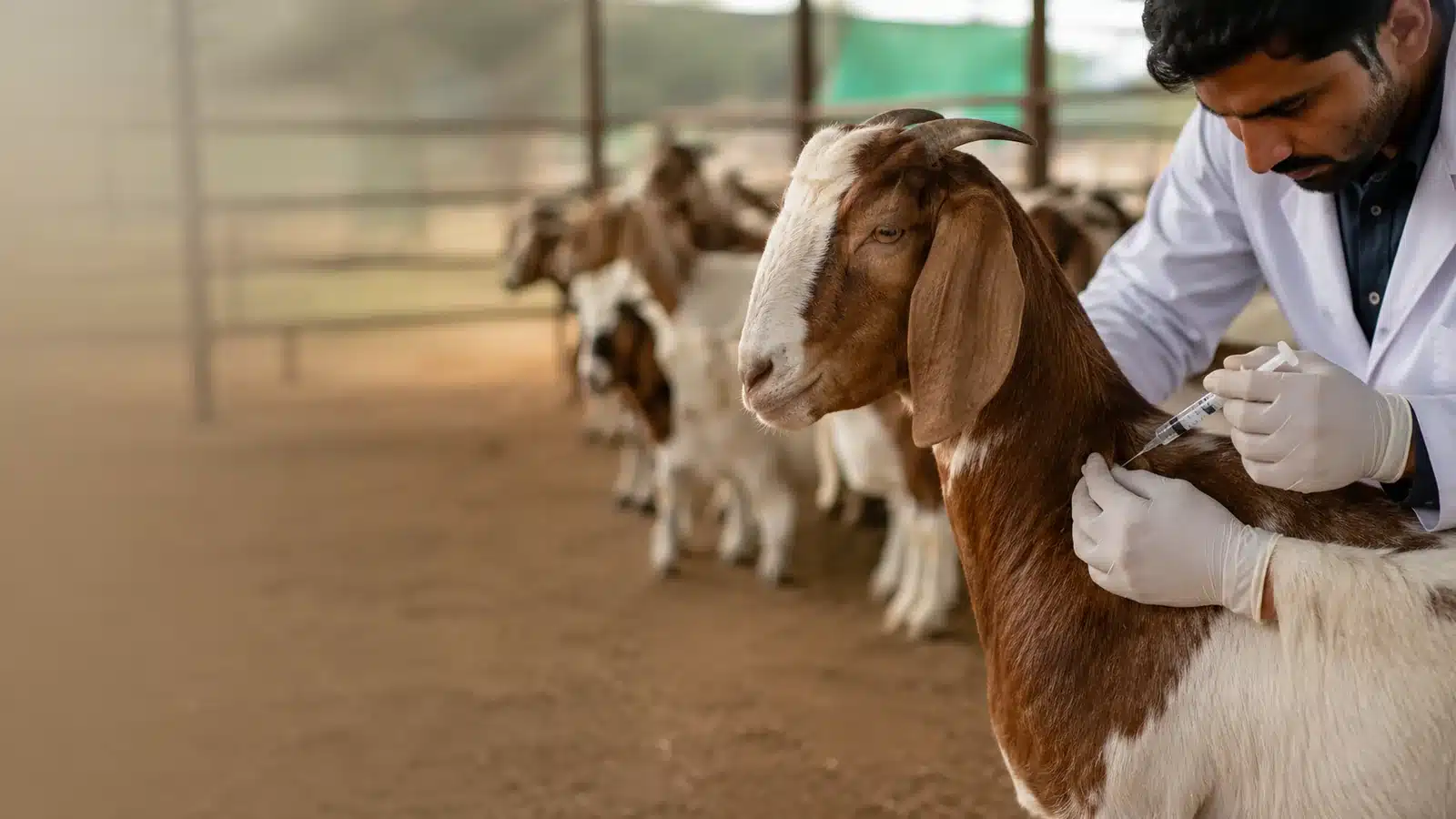
Vaccination is the single most cost-effective way to protect a goat herd. A few timely, inexpensive shots prevent diseases that can otherwise wipe out large parts of a flock. This guide sets out the core vaccines used for goats in India, when to give them, and the good practices that make them work.
Core goat vaccination schedule
The table below shows the commonly recommended schedule for goats in India. Kids get their first dose at the ages shown; adults are then boosted on the frequency listed.
| Disease | First dose (kids) | Booster / frequency | Best time |
|---|---|---|---|
| PPR (Peste des Petits Ruminants) | ~3 months | Long immunity (about 3 years); revaccinate per local programme | Any time; mass drives as scheduled |
| FMD (Foot & Mouth Disease) | 3–4 months | Twice a year (about every 6 months) | Typically September & March |
| Enterotoxaemia (ET) | ~3 months | Booster ~2–3 weeks after first dose, then yearly | Before monsoon (May–June) |
| Goat Pox | ~3 months | Annual | Before the pox season / as advised |
| Haemorrhagic Septicaemia (HS) | ~6 months | Annual | Before monsoon (May–June) |
| Black Quarter (BQ) | ~6 months | Annual | Before monsoon (May–June) |
| Anthrax (endemic areas only) | ~6 months | Annual in endemic areas | Before monsoon |
| Tetanus toxoid (as advised) | — | To pregnant does in late pregnancy where recommended | Last month of pregnancy |
Schedule compiled from Indian state animal-husbandry vaccination guidance. Doses and exact timing must be confirmed with your veterinarian.
Getting the most from every vaccine
- Vaccinate only healthy animals. Sick, heavily pregnant or stressed goats should be done later, on vet advice.
- Deworm first. A heavy worm load blunts the immune response — deworm a week or two before vaccinating where advised.
- Keep the cold chain. Vaccines lose potency if they get warm; carry them in a cool box and use them quickly once opened.
- Give the booster. The first dose primes immunity; the booster locks it in. Skipping boosters leaves gaps.
- Colostrum for kids. Newborns get early protection from the mother’s first milk — make sure every kid feeds within the first few hours.
- Record every shot. Note the date, vaccine and animal so you know when the next dose is due.
New animals and quarantine
Every new goat entering the farm should be kept separate for about two weeks, checked for disease, dewormed and brought up to date on vaccination before joining the herd. This one habit prevents most disease introductions. See Diseases of Goats for the signs to watch for.
Key takeaways
- PPR, FMD and ET are the core vaccines every Indian goat herd needs.
- Time ET, HS and BQ for just before the monsoon.
- Vaccinate healthy animals, keep the cold chain, and never skip boosters.
- Confirm the exact schedule and doses with your vet and State Animal Husbandry Department.