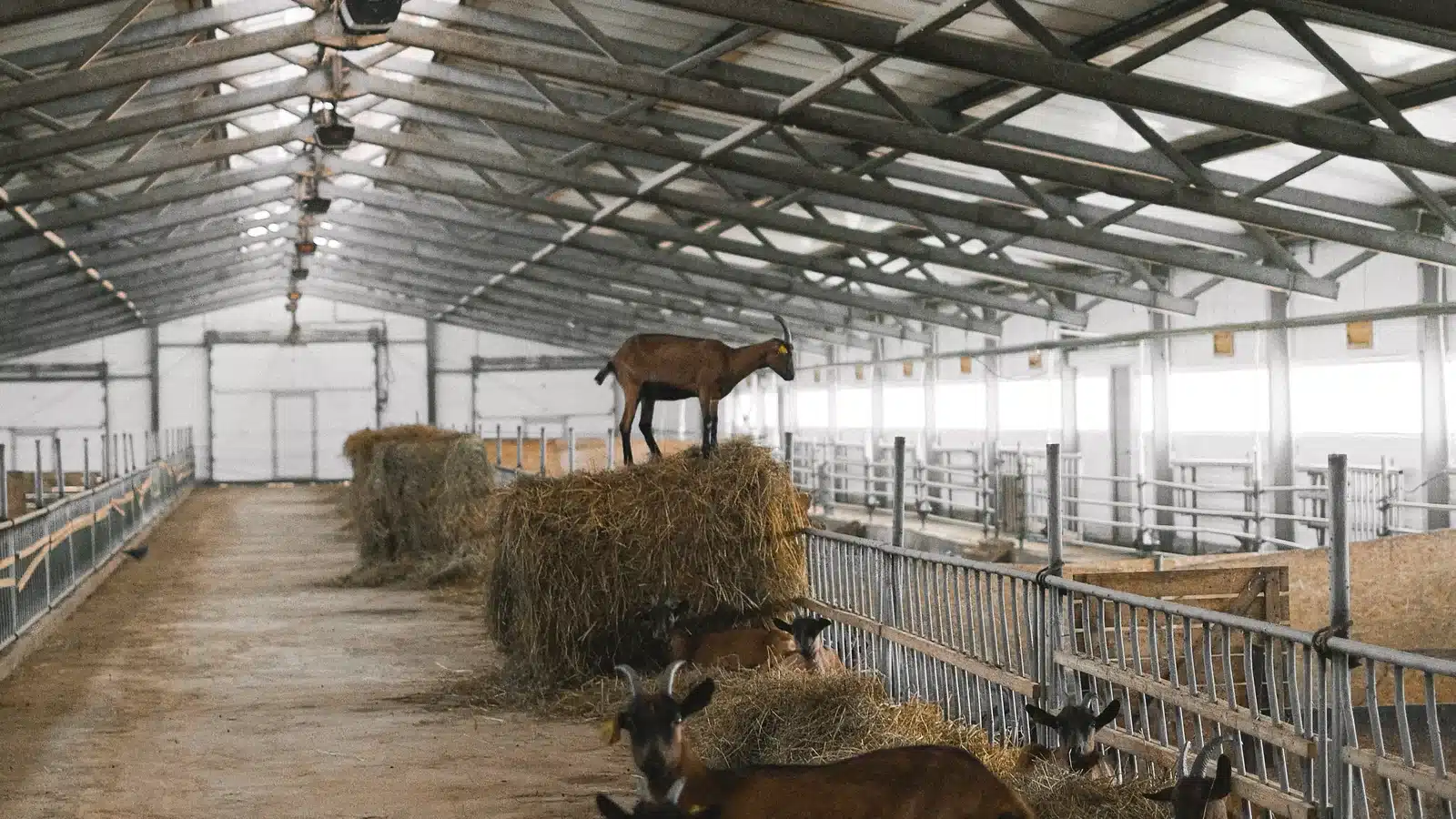

Stall-Fed Goat Farming
How to run an intensive, zero-grazing goat unit in India — space, layout, feeding and the economics of keeping goats housed year-round.
Stall-fed goat farming — also called intensive or zero-grazing rearing — keeps goats housed and brings feed to them, rather than sending them out to graze. It suits farmers with limited grazing land, and gives close control over feeding, health and breeding. Done well, it produces faster, more even growth and cleaner, more predictable output.
Why choose a stall-fed system
- Works where common grazing land is scarce or shrinking.
- Protects animals from heat, rain, theft and predators.
- Reduces parasite load compared with open grazing on shared pasture.
- Lets you feed a balanced, measured ration for steady weight gain and milk yield.
- Makes daily observation, record-keeping and health care far easier.
Space requirements
Adequate floor space keeps animals calm, clean and healthy. As a general guide for Indian conditions, plan covered floor space by category, and provide roughly twice that area as open exercise yard (a 1:2 covered-to-open ratio).
| Category | Covered floor space |
|---|---|
| Kids (0–3 months) | 6–12 sq ft |
| Adult doe | 12–16 sq ft |
| Pregnant / lactating doe | ~20 sq ft |
| Adult buck / castrated male | 20–25 sq ft |
General guidance drawn from Indian goat-housing recommendations; adjust to your breed, climate and local veterinary advice.
- Keep shed width under ~30 ft so fresh air reaches the centre.
- Allow about 30–50 cm of feeding-trough length per adult so all animals can eat at once.
- Provide clean water at all times, with roughly 3–5 cm of trough space per animal.
- Raise the floor or use a slatted platform where possible to keep animals dry.
Layout and design essentials
- Orientation: long axis east–west to limit direct sun and rain drive.
- Ventilation: open, mesh-screened sides above a ~3 ft solid wall; roof height around 3 m at the eaves.
- Flooring: sloped for drainage; slatted or well-bedded to stay dry and reduce foot problems.
- Separate pens: keep bucks, pregnant does, kids and sick animals apart.
- Feed & water: troughs reachable from the passage so you can feed without entering pens.
Feeding in a stall-fed unit
Because animals cannot browse, you must bring a balanced ration to them every day — this is the heart of the system. A typical daily ration combines cut green fodder (cut-and-carry), some dry roughage, and a measured amount of concentrate for growing, pregnant or milking animals. See our Feeding & Nutrition guides for fodder choices, quantities and rations.
Advantages and challenges
Advantages
- Higher, more even growth from controlled feeding.
- Lower disease and parasite exposure.
- Easier breeding control and record-keeping.
Challenges to plan for
- Daily labour to cut and carry fodder and clean pens.
- Higher feed cost per animal — feed is your biggest expense.
- Good ventilation and hygiene are essential to prevent respiratory and foot problems.
Key takeaways
- Stall-feeding suits farms with little grazing land and gives tight control over growth and health.
- Plan covered space by category and add about twice that as open yard.
- Ventilation, dry flooring and separate pens prevent most housing-related problems.
- Secure a year-round green-fodder supply before expanding the herd.